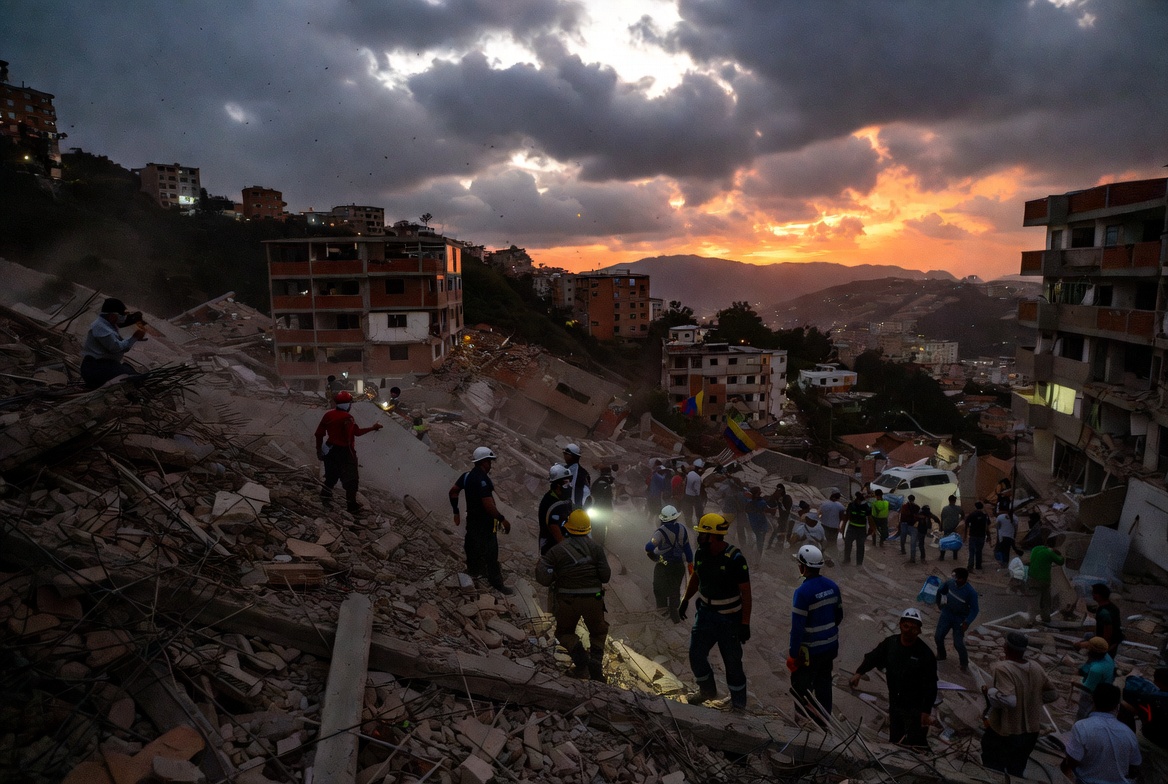
On June 24, 2026 (evening local time), two powerful back-to-back earthquakes (a “doublet”) struck northwestern and central Venezuela, with epicenters near San Felipe in Yaracuy state.
The first quake was a magnitude 7.2 (foreshock) at around 18:04 VET, followed about 39 seconds later by a stronger 7.5 mainshock (Venezuela’s most powerful in over a century, since the 1900 San Narciso event).
These strike-slip earthquakes caused widespread shaking felt as far as Bogotá, Colombia, and generated numerous aftershocks (at least 138 reported in the following days).
Immediate Impacts
The quakes caused extensive damage, especially in northern coastal areas like La Guaira (declared a disaster zone) and the capital Caracas, as well as surrounding regions. Many buildings collapsed or were heavily damaged (hundreds affected, including high-rises and hillside structures), roads cracked, and infrastructure (water, electricity) failed in hard-hit spots.
Rescue efforts focused on pulling survivors from rubble, with volunteers and limited heavy equipment involved due to strained resources. International aid and teams arrived from countries like El Salvador, the US (including Starlink), Mexico, Spain, and others.
Casualty Count (as of June 26, 2026)
Casualty figures rose rapidly and varied slightly by source, reflecting ongoing recovery and reporting challenges. The most recent updates indicate:
- Deaths: At least 920 (per National Assembly President Jorge Rodríguez on June 26). Earlier figures included ~589 (acting President Delcy Rodríguez) and ~235 (Health Minister).
- Injuries: Over 3,000–4,300 (reports range from ~2,980 to 4,300+).
- Missing/Trapped: Hundreds to thousands reported missing (some estimates over 49,000–50,000 on lists); ~172 still believed trapped under rubble as of June 26.
The USGS had warned of a high potential for significant casualties (possibly exceeding 10,000 in worst-case scenarios) due to the quakes’ strength, shallow depths, and vulnerable infrastructure.
Broader Context and Response
Venezuela was already facing severe economic and humanitarian challenges, which complicated the response (e.g., underfunded aid plans, strained health systems, and limited resources). Many displaced people in Caracas and La Guaira had nowhere to go.
The disaster deepened existing suffering, with hospitals overwhelmed and searches continuing urgently as the “golden window” for live rescues narrowed.
This is a fast-evolving situation with figures likely to update further as rescues and assessments progress. For the latest, check reliable sources like official Venezuelan updates, CNN, BBC, or Reuters.
About the Author