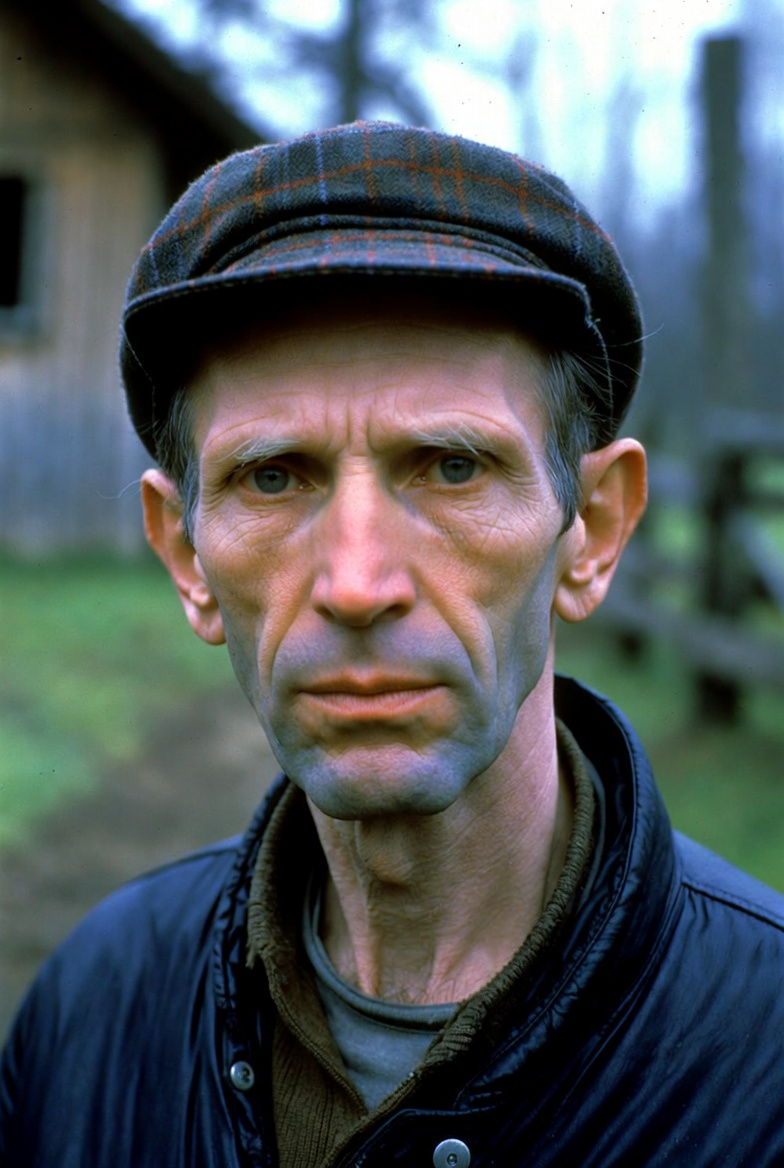
Ed Gein was one of the most infamous and bizarre criminals in American history, whose gruesome crimes in the 1950s shocked the small farming community of Plainfield, Wisconsin, and later inspired several iconic horror characters and films.
Early Life.
Edward Theodore Gein was born on August 27, 1906, in La Crosse, Wisconsin. He grew up in a highly dysfunctional family on an isolated farm. His father was an alcoholic who died in 1940. His mother, Augusta, was a domineering, deeply religious woman who preached strict moral values, constantly warning her two sons about the evils of women and the outside world. She forbade them from having friends or social lives, keeping them isolated on the farm.Gein and his older brother Henry worked the farm with their mother. Henry died in 1944 under suspicious circumstances during a brush fire—some accounts suggest Ed may have been involved, though it was officially ruled an accident. After his mother’s death in 1945, Gein was left completely alone on the farm. He began to deteriorate mentally, developing an intense obsession with his dead mother and a fascination with death, anatomy, and the female body.The CrimesFor years, Gein lived as a quiet, eccentric handyman and babysitter in Plainfield. Locals found him odd but harmless—he was known for telling strange, dark jokes and stories about grave robbing and shrunken heads.Between roughly 1947 and 1957, Gein engaged in grave robbing at local cemeteries. He later admitted to stealing bodies (or parts of bodies) from at least nine graves, usually choosing recently buried middle-aged women who resembled his mother. He would bring the remains back to his farmhouse, where he tanned the skin, made masks, lampshades, furniture covers, and even a “woman suit” that he wore to pretend to be his mother. He also kept skulls as bowls, made belts from nipples, and crafted other macabre household items from human remains. Gein committed only two known murders: In 1954, he killed hardware store owner Bernice Worden (age 58). He shot her with a rifle while she was working alone, then took her body to his farm, decapitated and gutted her, and hung her by the ankles like a deer.
Earlier, in 1947, he is strongly suspected of murdering tavern owner Mary Hogan (age 54), whose decapitated head was later found in his house.
Discovery and Arrest
On November 16, 1957, Bernice Worden’s son returned to the store and found her missing, along with a receipt for antifreeze that Gein had purchased earlier that day. Police went to Gein’s farm to question him. What they found inside the dilapidated, filthy house was horrifying: human body parts everywhere—skulls on bedposts, organs in jars, a heart on the stove, chairs upholstered with human skin, and the “woman suit” made from tanned female skin complete with breasts and a mask-like face. Gein was arrested that day. He confessed to the grave robbing and the murder of Bernice Worden, claiming he entered a trance-like state during the crimes and did not fully remember details. He denied killing Mary Hogan at first but later admitted it.
Trial and Later Life
Gein was found mentally unfit to stand trial initially and was committed to a psychiatric hospital. In 1968, he was tried for the murder of Bernice Worden. He was found guilty but insane and returned to the hospital for the rest of his life. He never expressed remorse and seemed detached from the horror of his actions. Ed Gein died of respiratory failure on July 26, 1984, at age 77 while still institutionalized. He was buried in Plainfield next to his mother and brother.
Legacy
Gein’s crimes revealed a deeply disturbed mind driven by maternal obsession, necrophilia, and a desire to “become” his mother. His house was burned down by locals shortly after the discovery. The case became a cultural phenomenon because of its extreme grotesqueness. Elements of Gein’s story directly inspired: Norman Bates in Psycho (the mother obsession and taxidermy-like preservation)
Leatherface in The Texas Chain Saw Massacre (the skin masks and furniture made from human remains)
Buffalo Bill in The Silence of the Lambs (the “woman suit”)
Gein remains one of the most disturbing real-life killers precisely because his crimes blurred the line between grave robbing, murder, and creating horrific “art” from human bodies. His story is often cited as a chilling example of what isolation, severe mental illness, and unchecked obsession can produce.
About the Author