The Story of Jack the Ripper
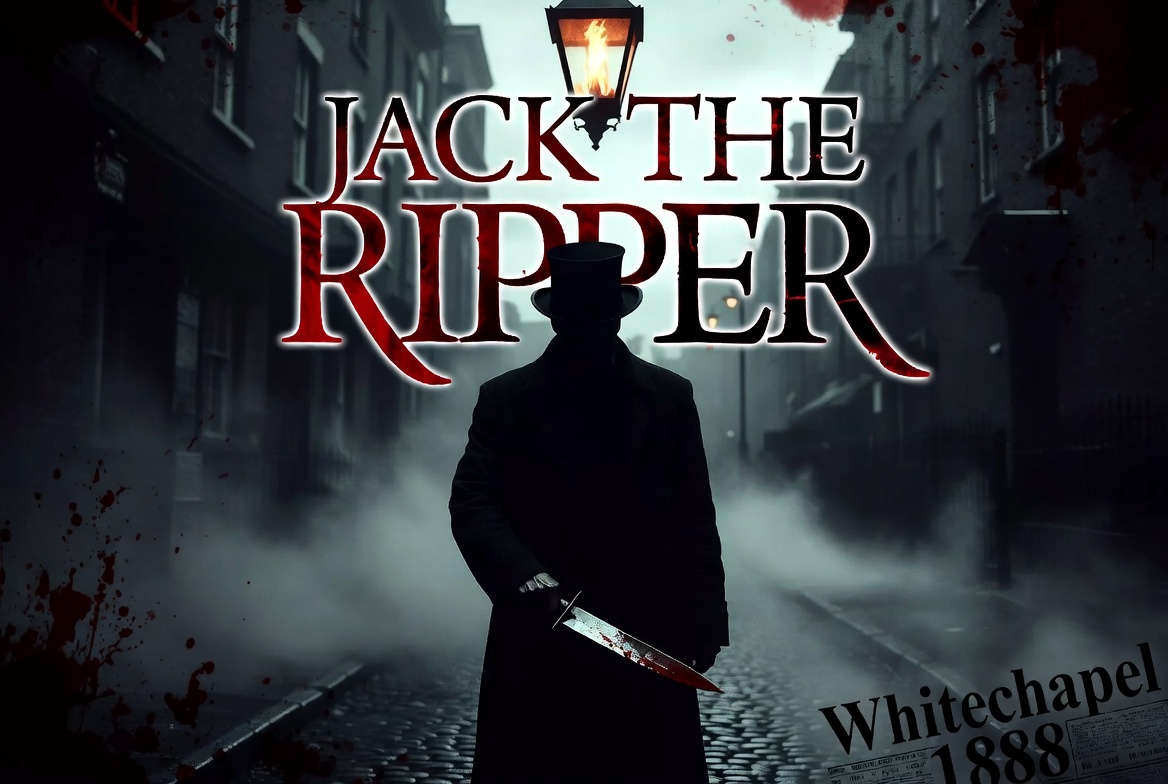
In the autumn of 1888, one of the most infamous serial killers in history terrorized the impoverished Whitechapel district of East London. He was never identified and became known as Jack the Ripper.
The Murders
Between August and November 1888, the Ripper is believed to have murdered at least five women, known as the “Canonical Five.” All were prostitutes living in extreme poverty in the slums of Whitechapel. The killings were exceptionally brutal, involving deep throat slashes and horrific mutilations, often performed with surgical precision in the early morning hours.The victims were:
- Mary Ann Nichols (31 August)
- Annie Chapman (8 September)
- Elizabeth Stride (30 September)
- Catherine Eddowes (30 September – killed less than an hour after Stride in a “double event”)
- Mary Jane Kelly (9 November) – the most savage of the murders, carried out indoors
The killer often removed internal organs, particularly the uterus, kidneys, and heart in some cases, leading police surgeons to believe the murderer had some anatomical knowledge.The Name “Jack the Ripper”The name originated from a letter sent to the Central News Agency on 25 September 1888, signed “Jack the Ripper”. Although many letters were sent to the police and press, most were hoaxes. The most infamous was the “From Hell” letter, which arrived with half a human kidney supposedly taken from one of the victims.
The Investigation
The Metropolitan Police and Scotland Yard were under enormous public pressure. Hundreds of people were interviewed and several suspects were investigated, including:
- Aaron Kosminski (a Polish barber with mental illness)
- Montague John Druitt (a barrister who died by suicide)
- Francis Tumblety (an American quack doctor)
- And even wild theories involving royalty or famous artists
Despite modern DNA analysis on some evidence, no suspect has ever been conclusively proven to be Jack the Ripper.
Why He Remains Famous
Jack the Ripper was not the first serial killer, but he was one of the first to be sensationalized by the modern mass media. The brutal nature of the crimes, the poverty of Victorian Whitechapel, the taunting letters, and the fact that he was never caught created a legend that still fascinates people over 135 years later.To this day, the identity of Jack the Ripper remains one of the greatest unsolved mysteries in criminal history.
About the Author