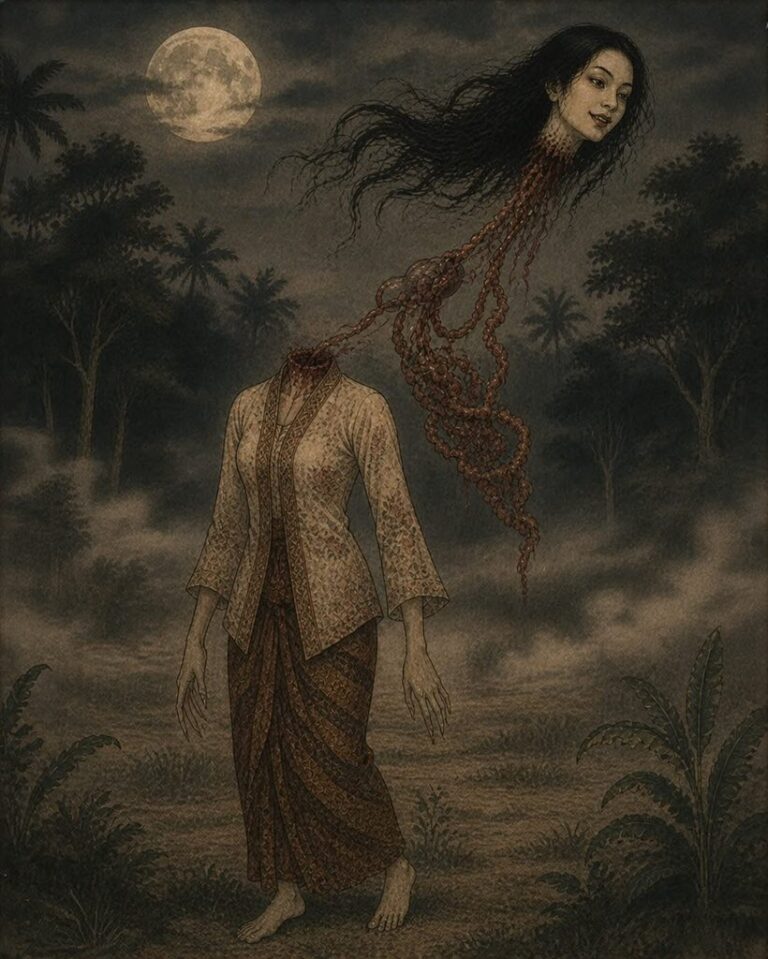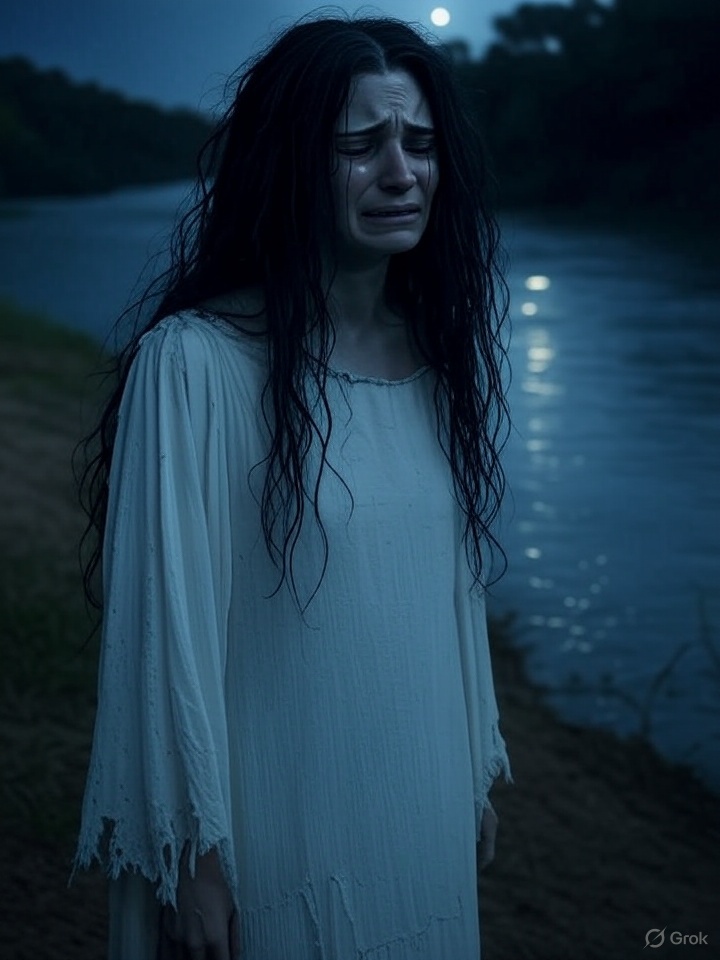
La Llorona, meaning “The Weeping Woman,” is a vengeful ghost in Mexican folklore who roams near bodies of water, mourning her children, whom she drowned in a fit of rage after her husband’s infidelity. The most common version of the story involves a woman named María, a beautiful peasant who marries a wealthy man, often a Spanish ranchero or conquistador. They have two or three children, but he eventually betrays her—either by being unfaithful or by leaving her for a woman of higher social status. In her anger, María drowns her children in a river, then, overcome with guilt, drowns herself. Denied entry to heaven until she finds her children, her spirit is cursed to wander, crying “¡Ay, mis hijos!” (“Oh, my children!”), searching for them. She’s often depicted in a white dress, her wails a harbinger of misfortune or death for those who hear her. Some versions say she kidnaps children, mistaking them for her own, or attacks unfaithful men.
Her origins may trace back to pre-Hispanic times, with parallels to Aztec goddesses like Cihuacoatl, a deity associated with motherhood and wailing omens, or Chalchiuhtlicue, a water goddess linked to child sacrifice. Others connect her to La Malinche, the Indigenous interpreter and mistress of Hernán Cortés, who some stories claim killed her children after Cortés abandoned her—though historical evidence doesn’t support this. The tale also shares similarities with European myths, like the Greek story of Lamia, who killed children out of jealousy, or the Germanic “White Lady,” suggesting a blend of Indigenous and colonial influences.
Comparison to Doris Bither and Abraham Lincoln’s Ghost
La Llorona’s story shares thematic elements with the Doris Bither case and Abraham Lincoln’s ghost but differs in key ways:
- Nature of the Haunting:
- La Llorona: Her haunting is tied to water and her personal tragedy, with a clear motive—searching for her children. She’s a vengeful spirit, often targeting children or men, reflecting her grief and rage. Her presence is widespread, reported across Mexico, Central America, and the southwestern U.S., making her a cultural archetype rather than a localized phenomenon.
- Doris Bither: The Doris Bither case involved poltergeist-like activity in a single home, with physical assaults attributed to invisible entities. Unlike La Llorona, the phenomena seemed tied to B профіleither’s psychological state, with investigators suggesting psychokinetic energy from her trauma as a cause. It’s a modern, individual case, lacking the mythological depth of La Llorona.
- Abraham Lincoln’s Ghost: Lincoln’s ghost, often seen in the White House, is a residual haunting tied to his historical significance and tragic death. Unlike La Llorona, Lincoln’s spirit isn’t vengeful; sightings, like Grace Coolidge’s account of him gazing out a window, suggest a melancholic presence. His haunting reflects national trauma rather than personal vendetta.
- Cultural Role:
- La Llorona serves a cautionary purpose in Mexican culture, warning children to avoid water at night and reinforcing social norms about motherhood and fidelity. Her story has been used to symbolize the pain of Indigenous women during the Spanish conquest, blending personal tragedy with collective history.
- The Doris Bither case, while sensational, lacks a broader cultural narrative. It’s more a study in parapsychology, with investigators like Barry Taff focusing on psychological explanations over folklore.
- Lincoln’s ghost, like La Llorona, carries cultural weight, symbolizing America’s unresolved grief over the Civil War and his assassination. However, his ghost is more a passive symbol of history, not a cautionary tale.
- Visual and Thematic Connection to the Generated Image: The image I generated of Abraham Lincoln’s ghost depicts him as a spectral figure in a top hat and frock coat, standing at a window in the Yellow Oval Room, gazing toward the Potomac River with a faint green mist around him. This mirrors a reported sighting by Grace Coolidge and captures the melancholic tone of his haunting. La Llorona, too, is often described as a spectral figure in a white dress, associated with water (like the Potomac in Lincoln’s image), and her nocturnal wailing evokes a similar eerie atmosphere. However, while Lincoln’s ghost in the image is a silent, reflective figure, La Llorona’s presence would be marked by her iconic cries, adding a layer of auditory terror. Both figures, though, embody a sense of being trapped by their past—Lincoln by his assassination, La Llorona by her guilt.
- Psychological vs. Supernatural:
- La Llorona’s story, while supernatural, is often interpreted as a metaphor for maternal guilt, betrayal, and the societal pressures on women, especially Indigenous women during colonial times. Some modern retellings, like those by Chicana feminists, reframe her as a symbol of resistance against patriarchy.
- The Doris Bither case leans heavily on psychological explanations, with Taff suggesting the phenomena stemmed from Bither’s emotional distress, similar to how La Llorona’s actions might reflect her mental state after betrayal. However, La Llorona’s myth has no documented investigation like Bither’s, making her more a cultural construct than a verifiable case.
- Lincoln’s ghost lacks a psychological origin, as he’s not tied to personal guilt but rather to historical trauma. His sightings, often by credible figures like Churchill, suggest a collective projection of grief rather than an individual’s mental state.
Critical Perspective
La Llorona’s legend, while compelling, lacks the firsthand documentation of cases like Doris Bither’s, where investigators recorded physical evidence (albeit contested). Her story’s variations—sometimes María, sometimes La Malinche—reflect how folklore evolves to fit cultural needs, much like Lincoln’s ghost became a symbol of national mourning during times of crisis, such as World War II when Churchill allegedly saw him. Unlike Bither’s case, which remains a singular event with no lasting cultural role, La Llorona and Lincoln’s ghost endure as symbols of deeper societal wounds—colonial oppression for La Llorona, and the scars of slavery and division for Lincoln.
The establishment narrative around La Llorona often frames her as a villainous mother, but this overlooks the systemic factors—like colonial violence and gender roles—that may have shaped her story. Similarly, Lincoln’s ghost is romanticized as a noble spirit, but this ignores the political motivations behind some sightings, like Jerry Smith’s tales possibly being a way to entertain or gain attention in the late 19th century.
About the Author