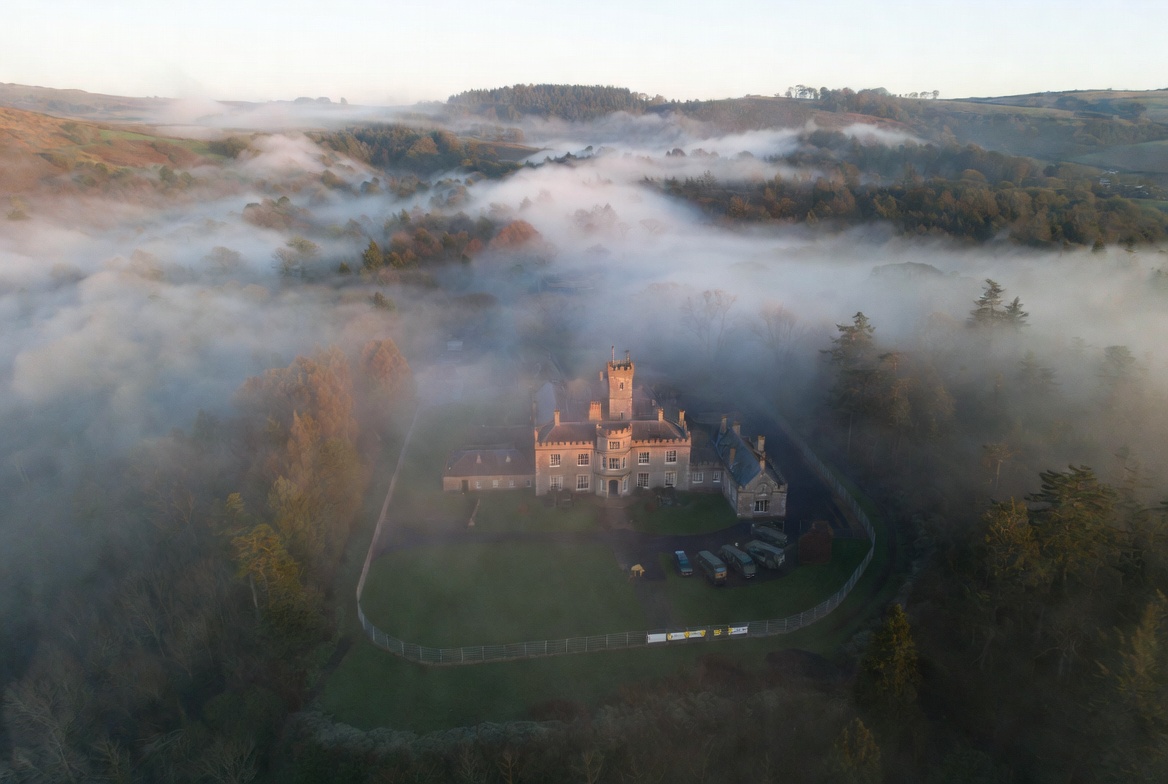
RAF Rudloe Manor, located between Box and Corsham in Wiltshire, England, is the site most frequently nicknamed “Britain’s Area 51” or “England’s Area 51.” This stems primarily from its role in investigating UFO reports during the mid-20th century, combined with its secretive military history, underground facilities, and long-standing denial by authorities of any extraordinary activities.
History and Establishment
The site originated around a 17th-century manor house (Rudloe Manor itself, with parts dating back even earlier) situated atop extensive underground quarries that once supplied Bath stone for construction. In the 1930s, some of these vast caverns—totaling about 2.25 million square feet—were adapted as a Central Ammunition Depot. During World War II, it became RAF Rudloe Manor (also known as RAF Box). It served as the underground Operations Centre for No. 10 Group RAF, responsible for defending southwest England and South Wales. Key facilities included:
- An Operations Room for directing fighter aircraft.
- A Filter Room that processed incoming intelligence on enemy movements.
- A Communications Centre.
These were housed in partially buried bunkers for protection against air raids. Women’s Auxiliary Air Force personnel staffed much of the site. After the war, it transitioned into various administrative, training, and signals roles, including headquarters functions for Southern Sector RAF, training groups, and later communications infrastructure like the Skynet satellite system. It also hosted elements of the Royal Observer Corps and nuclear warning systems during the Cold War.
UFO Investigations and the “Area 51” Reputation
In the post-war era, particularly the 1950s, Rudloe Manor became the central hub for the British military’s handling of UFO (then often called “flying saucer”) reports. Declassified Ministry of Defence (MoD) files released in the 2000s confirmed that the site—through units like the Provost and Security Services—collected, filtered, and investigated sightings, witness statements, and related phenomena across the UK. This included crop circles, alleged abductions, and unexplained aerial events. For decades, the MoD publicly denied any dedicated UFO program or that Rudloe Manor had such a role, attributing reports to routine security matters or dismissing them outright. This secrecy fueled conspiracy theories. Rumors persisted that the base housed recovered extraterrestrial craft, alien bodies, or reverse-engineered technology—echoing Area 51 lore in the United States. Some accounts claimed coordination with American forces and that sensitive materials were stored in the extensive underground tunnels and caverns. Official records show that most sightings were explained as aircraft, weather phenomena, balloons, or hoaxes, with only a small percentage (around 5%) remaining unidentified after investigation. The UK’s broader UFO desk operated until around 2009, when it was closed as sightings declined and resources were redirected. However, the association stuck, amplified by books, documentaries, and researchers highlighting inconsistencies in official statements.
Other Secret Activities
Beyond UFOs, the base supported intelligence, counter-espionage, communications, and Cold War monitoring (e.g., radiation and nuclear threats). Its underground network made it ideal for secure operations. Adjacent military sites, like Basil Hill Barracks, added to the area’s classified atmosphere.Closure and Current StatusThe RAF station officially closed around 2000. Parts of the wider Corsham complex remain in use by Defence Digital and other MoD elements for communications and secure operations. The historic Rudloe Manor house was sold into private ownership in 2021 and has undergone restoration. Much of the site is fenced, monitored by security cameras, and restricted, with warnings about dangers from its former military use. This ongoing inaccessibility continues to spark interest from urban explorers and conspiracy enthusiasts.
Other UK Sites Sometimes Called “Britain’s Area 51”
- Orford Ness (Suffolk coast): A remote shingle spit used for top-secret military testing from World War I through the Cold War. It hosted early radar experiments, the Atomic Weapons Research Establishment (AWRE) for environmental and explosive testing of nuclear weapon components (in distinctive “pagoda” buildings), and over-the-horizon radar like Cobra Mist. Now a National Trust nature reserve with controlled access due to unexploded ordnance risks, its eerie, abandoned structures and history of extreme secrecy earn it the nickname in some contexts.
- RAF Menwith Hill (North Yorkshire): A massive signals intelligence and surveillance base with giant radomes (“golf balls”), jointly operated with the US. Focused on communications interception, it is often labelled a spy hub rather than a classic “Area 51” testing site. themhac.uk
- Porton Down (Wiltshire): A chemical and biological defence research facility with a dark history of human testing and weapon development, also subject to conspiracy claims (including alleged alien autopsies in fringe theories).
Rudloe Manor stands out for its direct tie to UFO secrecy. Like its American counterpart, it represents Cold War-era opacity, official denials, and public fascination with the unknown—though no credible evidence has emerged of extra-terrestrial involvement at any UK site. The “British Area 51” label highlights how governments’ handling of unexplained phenomena inevitably breeds speculation.
About the Author